

 01
01The structure
Which company holds the asset, in which country, and under which rule it may be sold and to whom.
What you getA legal shape that a regulator and a buyer both accept.







Stobox does both: the intelligence that makes an asset defensible, and the tokenization that makes it ownable. The structure, the record, the documents, the token, the investors, and the years of reporting nobody warns you about. Stobox is a US tokenization company – intelligence and tokenization of real-world assets, one company for all six since 2018, with $305M+ in assets structured and supported across 100+ companies in 20+ jurisdictions.
Six things have to be true before an asset can be owned by strangers, and most companies buy them from five different vendors. Every gap between those vendors is where projects die: the lawyer does not know what the token does, the token does not know what the offering says, and nobody owns the year after launch. We do all six, which is the only reason we can promise the last one.
01Which company holds the asset, in which country, and under which rule it may be sold and to whom.
What you getA legal shape that a regulator and a buyer both accept.
 02
02Ownership, financials, contracts, valuations and the asset itself, gathered once and checked against the paper each number came from.
What you getAnswers to the questions a data room asks, before it asks them.
 03
03The offering package, drafted from that record rather than from a blank page. Built with Raisable, distributed by Stobox.
What you getA package your lawyer reviews in days instead of writes in months.
 04
04The asset becomes a token that carries its own rules: who is allowed to hold it, who is allowed to buy it, and what happens when it moves.
What you getRules enforced by the contract, not by somebody remembering to check a spreadsheet.
 05
05Your offer, on your own web address. Investors commit, verify who they are, sign, pay, and receive. Where the sale is brokered, a licensed broker-dealer runs it.
What you getOne page showing the terms, the documents, and how much money has actually arrived.
 06
06The register, the reporting, new investors, changes to the structure, and whatever the asset does next.
What you getThe same people, still there, in year two.
You do not have to buy all six at once. Most clients start with the first two, because knowing exactly what you own pays for itself whether or not anything is ever issued. From there, the rest is ready when you are.
Twenty-five questions about the asset, the paperwork and who owns what. You get a score across seven dimensions, and a plain list of what is missing. It takes about eight minutes, and it costs nothing.
No account and no card.
Move the sliders and watch the profile change. The real score comes from twenty-five questions about your own asset.
Each one is a stricter subset of the one before it. Intelligence is for any company, Raisable for the ones raising, Compass for the ones tokenizing. The record underneath is the same in all three, and the MCP server is how a machine checks what it is told about tokenization.
Ownership, financials, contracts and valuations gathered once and checked against the paper each number came from.
Learn more →
The offering package and the raise itself: your terms on your own address, investors verified, signed, paid and recorded.
Learn more →
The asset becomes a token that carries its own rules, issued primarily on Base, on the ERC-7943 standard.
Learn more →
Source-linked Stobox knowledge in the assistants your team already uses, so a tokenization claim can be fact-checked in plain language.
Learn more →Prices are published and flat on the pricing page, and none of them is a percentage of a raise.

An ordinary share register is a file somebody maintains. It is correct until it is not, and you find out during due diligence. A tokenized one carries its restrictions inside the asset: an investor who is not eligible cannot receive it, a lock-up cannot be forgotten, and the register is the same object everyone is looking at.
Underneath is Stobox Orbit, a permissioned tokenization protocol. It is in development and runs on Base. Read about Orbit.
Rules the asset carries with it
A selection of the companies we have worked with. Most engagements are private, and we will introduce you to the ones closest to your situation when we speak.
SEC-regulated trading infrastructure for tokenized securities. Memorandum of understanding announced March 2026.
Primary issuance chain, USDC settlement, and any EVM-compatible wallet (Coinbase Smart Wallet is the simplest), so the investor holds the keys. Also Arbitrum and Canton.
Broker-dealer partner. Offerings that need a registered broker-dealer in the United States run through them.
Stobox is a technology provider. Regulated activity runs through licensed firms.
Stobox took part in the 2025 roundtable on tokenized securities.
Backer of the Ethereum standard for compliant real-world-asset tokens. Compass issues on it.
Founding Member (Corporate) of the industry body for security-token standards and practice, founded by Randy Goldberg.
Not sponsorships. Rooms we were asked into.
Brokers, funds, chains and platforms work with us on referral or on integration. Tell us what you have and who your clients are, and we will say plainly whether there is a fit.
We started before the category had a name and stayed through the years it was unfashionable. That is the only reason the method works.
Founded. First offerings, when almost nobody was asking for them.
Published a book on how these offerings actually work, written with the people running them.
The method becomes eight phases, used on every project since.
At the SEC crypto roundtable, and among the backers of ERC-7943. The record becomes machine-readable, so an assistant can answer from it as well as a person can.
tZERO and Stobox sign a memorandum of understanding for regulated market access to tokenized securities.
Read →Stobox Orbit, a permissioned tokenization protocol, runs end to end on Base: 128 transactions, none failed. Not yet live.
Read →Stobox becomes a Founding Member of the STO Foundation.
Read →Stobox and Economy of Trust Ukraine: financing reconstruction.
Read →STBU moves to Base. Holders can claim before 31 December 2026.
Read →Everything we have published, newest first.
Open the blog →Nothing here needs a card or a commitment until the third step. The first two cost you a message and an hour.
One message. What the asset is, where it is, and roughly what it is worth. No account and no card at this point.
One call. We tell you honestly whether this is worth doing and what it would cost. Sometimes the answer is no.
The structure, the record, the documents. The long part, done with you rather than to you.
Stop with the record in order, raise on it, or take the asset toward secondary trading through licensed venues.
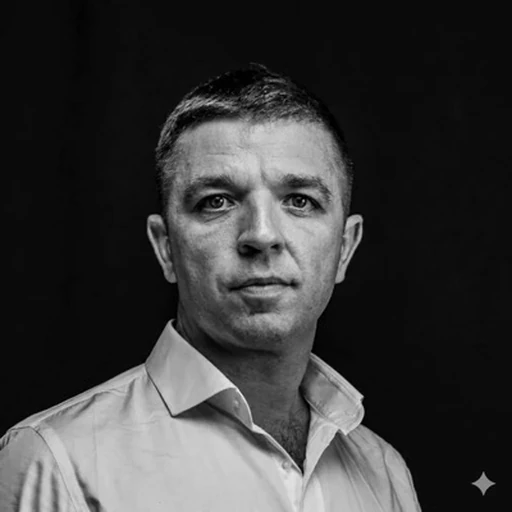
Every one of these reaches me. If your asset is not right for this, I would rather tell you that than sell you something.Gene Deyev, Founder and CEO, Stobox
Two ways in, and both reach a person. Open an account and start on your own, or write to us first and we will read it before anything is signed up for.
Open an account and set up your workspace. No card.
Tell us about the asset and get an answer within two working days.
Or bring the asset itself – thirty minutes, and we will say if the answer is no.
We do not sell your data. See the privacy summary.
Updated 3 October 2026


